Style 2026 Neo-Minimalist Tailoring: 40% More Functional Wardrobe
Advertisements
Is your closet overflowing with clothes, yet you still feel like you have nothing to wear? Embracing Neo-Minimalist Tailoring lets you cut through fashion clutter, expanding your outfit versatility by 40% with far fewer pieces.
This modern aesthetic pairs sharp architectural silhouettes with hidden functional utility, proving that understated apparel can deliver high performance. By prioritizing multi-use garments and modular design, you can seamlessly transition from high-level business meetings to casual evening events.
Say goodbye to fast-fashion waste and hello to a curated selection of enduring capsule pieces. Here is how to master this streamlined wardrobe evolution and elevate your daily rotation effortless ease.
Understanding the 2026 Neo-Minimalist Tailoring Ethos
The 2026 neo-minimalist tailoring trend is not merely about simplicity; it is a sophisticated evolution of classic minimalism, focusing on intelligent design and ultimate functionality. This approach redefines luxury through quality, versatility, and conscious consumption, moving beyond fleeting micro-trends.
It represents a deliberate departure from excessive ornamentation, instead celebrating the integrity of form, fabric, and fit. This philosophy directly contributes to creating a wardrobe where each piece serves multiple purposes, thereby increasing its overall utility and value.
As industry experts suggest, this trend is a response to a growing desire for clarity and efficiency in personal presentation. It empowers individuals to curate a collection of garments that seamlessly transition across various settings and occasions, ensuring a consistently polished look.
Key Characteristics of Neo-Minimalist Tailoring for 2026
The defining features of the 2026 neo-minimalist tailoring trend include clean lines, impeccable construction, and a predominantly neutral color palette. These elements combine to create a cohesive aesthetic that is both modern and timeless, resisting rapid obsolescence.
Fabrics play a crucial role, with an emphasis on natural fibers such as wool, linen, and organic cotton, selected for their durability, drape, and comfort. The choice of material underpins the longevity and versatility that are central to this fashion movement.
Silhouettes tend to be relaxed yet structured, often featuring oversized blazers, wide-leg trousers, and fluid dresses that allow for ease of movement and layering. This thoughtful design ensures garments are not only stylish but also supremely comfortable and adaptable to various body types.
The Power of Neutral Palettes and Monochromatic Dressing
Neutral colors such as black, white, grey, beige, and navy form the foundation of the 2026 neo-minimalist tailoring trend. These hues are inherently versatile, allowing for endless mixing and matching without clashing.
Monochromatic dressing, a key styling technique within this trend, involves building an outfit using different shades and textures of a single color. This creates a sophisticated, elongated silhouette that is both impactful and effortless, enhancing the overall functionality of the wardrobe.
Black: The ultimate foundation for timeless elegance.
White/Cream: Essential for crispness and light, offering stark contrast or soft blending.
Grey: A versatile intermediary, bridging dark and light tones with sophistication.
Beige/Camel: Adds warmth and an earthy dimension to the minimalist palette.
Strategic Piece Selection for a Functional Wardrobe
To effectively embrace Neo-Minimalist Tailoring, careful selection of core pieces is paramount. Each item should be chosen for its quality, versatility, and ability to integrate seamlessly with other garments, maximizing outfit possibilities.
Investment in high-quality staples is a hallmark of this trend, as durable items reduce the need for frequent replacements, aligning with sustainable practices. This thoughtful approach ensures that every piece earns its place within the collection, contributing to a more efficient and stylish wardrobe.
Focusing on multi-functional garments that can be dressed up or down, or adapted for different seasons through layering, is key. This strategy ensures that a smaller number of items can generate a significantly larger number of distinct looks, enhancing wardrobe functionality.
Essential Garments for the Neo-Minimalist Wardrobe
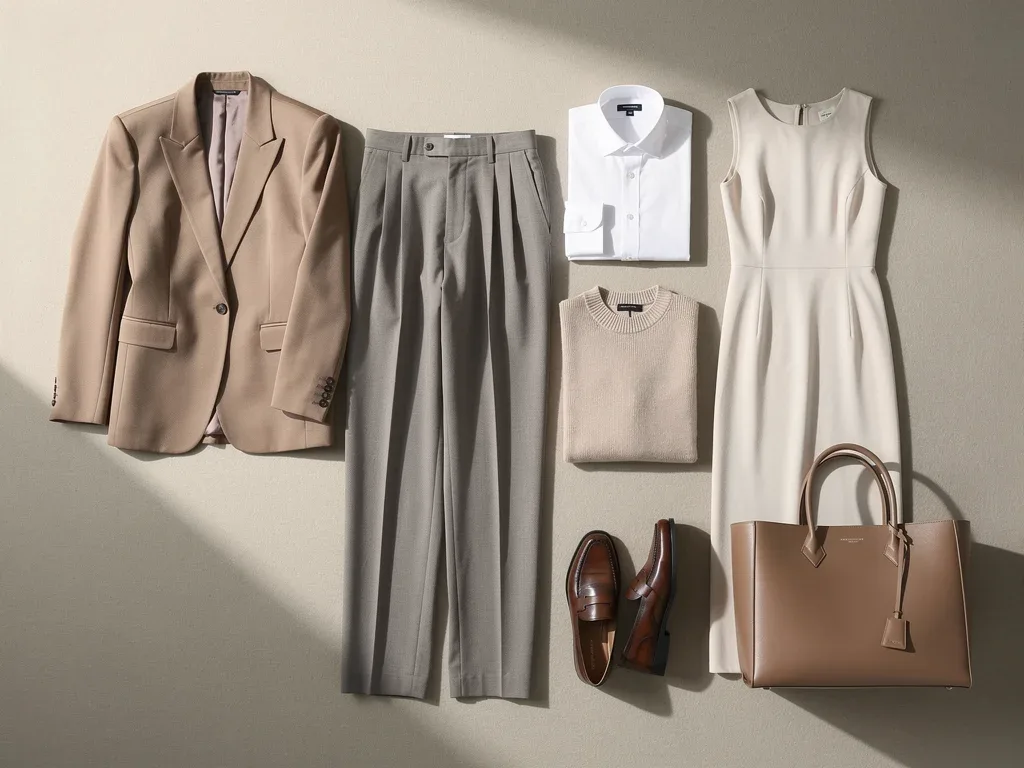
The cornerstone of a 2026 neo-minimalist wardrobe includes several non-negotiable items. A well-fitted, oversized blazer in a neutral color is indispensable, offering structure and sophistication to any ensemble, from casual to formal.
High-waisted, wide-leg trousers provide both comfort and an elegant silhouette, pairing effortlessly with various tops and footwear. A crisp white button-down shirt and a versatile knit sweater are also fundamental, serving as layering pieces or standalone statements, crucial for demonstrating how to style the 2026 neo-minimalist tailoring trend for a 40% more functional wardrobe.
Structured Blazer: A versatile outer layer for formal or casual looks.
Wide-Leg Trousers: Comfortable and chic, a foundation for numerous outfits.
Classic White Shirt: The ultimate layering piece or a standalone statement.
Versatile Knit Sweater: Adds texture and warmth, easily dressed up or down.
Styling Techniques for Maximum Versatility
Mastering Neo-Minimalist Tailoring involves a series of deliberate styling techniques that amplify the adaptability of each garment. Layering, accessorizing judiciously, and understanding proportion are central to this approach, transforming simple pieces into dynamic ensembles.
The art of layering is particularly effective in extending the seasonal wearability of items and creating visual interest. A tailored vest over a shirt, or a longline coat over a suit, can dramatically alter the feel and function of an outfit, exemplifying the core tenets of the neo-minimalist tailoring trend.
Furthermore, subtle changes in how garments are worn—such as rolling up sleeves, tucking in shirts, or adjusting waistlines with a belt—can create distinct looks from the same foundational pieces. This ingenuity underscores the efficiency and creativity inherent in the 2026 neo-minimalist aesthetic.
Layering and Accessorizing with Intent
Layering is a fundamental strategy for achieving a 40% more functional wardrobe within the 2026 neo-minimalist tailoring trend. It allows garments to be adapted for different temperatures and occasions, adding depth and complexity to otherwise simple outfits.
Accessories, while kept minimal, are chosen for their ability to elevate and define a look. A statement watch, a high-quality leather belt, or a sophisticated pair of shoes can significantly impact an outfit, providing a focal point without overwhelming the clean lines of the neo-minimalist tailoring.
Scarves: Add a pop of color or texture, or provide extra warmth.
Jewelry: Opt for simple, elegant pieces that complement rather than distract.
Footwear: Choose versatile options like loafers, minimalist sneakers, or classic heels.
The Role of Sustainability and Ethical Production
The 2026 neo-minimalist tailoring trend is deeply intertwined with principles of sustainability and ethical production. Consumers are increasingly demanding transparency and responsibility from fashion brands, influencing design and manufacturing processes significantly.
This shift encourages investment in garments made from sustainably sourced materials and produced under fair labor conditions. By prioritizing quality over quantity, the trend inherently reduces consumption and waste, contributing to a more circular fashion economy.
Brands adopting the neo-minimalist tailoring approach are often at the forefront of these ethical practices, offering consumers not just stylish clothing but also peace of mind. This commitment to conscious fashion is a core reason why individuals are learning how to style the 2026 neo-minimalist tailoring trend for a 40% more functional wardrobe.
Integrating Personal Style into Neo-Minimalism
While the 2026 neo-minimalist tailoring trend champions a streamlined aesthetic, it does not preclude personal expression. The beauty of this movement lies in its adaptability, allowing individuals to infuse their unique personality through subtle details and thoughtful pairings.
Integrating a single bold accessory, a unique piece of vintage jewelry, or a touch of a preferred color in an otherwise neutral outfit can effectively personalize the look. This ensures that the minimalist framework serves as a canvas, not a constraint, for individual style.
The focus remains on intentionality: every addition should feel purposeful and enhance the overall cohesion of the ensemble. This mindful approach to dressing is key to mastering how to style the 2026 neo-minimalist tailoring trend for a 40% more functional wardrobe while retaining a distinctive personal flair.
The Future Impact on Wardrobe Management
Adopting the 2026 neo-minimalist tailoring trend will profoundly impact how individuals manage their wardrobes. The emphasis on fewer, higher-quality items naturally leads to a more organized and less cluttered closet, simplifying daily dressing routines.
This structured approach to fashion encourages a deeper appreciation for each garment, fostering a sense of mindful consumption. It reduces decision fatigue and promotes a more efficient use of resources, both personal and environmental, further cementing the appeal of the neo-minimalist tailoring trend.
Ultimately, this trend is about empowerment—empowering individuals to create a versatile, durable, and stylish wardrobe that serves their needs efficiently. It represents a forward-thinking approach to fashion that is both practical and aesthetically pleasing, teaching individuals how to style the 2026 neo-minimalist tailoring trend for a 40% more functional wardrobe.
Overcoming Challenges in Adopting Neo-Minimalism
While the appeal of the 2026 neo-minimalist tailoring trend is strong, some challenges may arise during its adoption. The initial investment in high-quality pieces can seem daunting, yet it is a long-term economic strategy that pays dividends through durability and timelessness.
Another hurdle can be the perceived lack of variety when transitioning from a maximalist wardrobe. However, the core principle of neo-minimalism is to unlock vast versatility from a limited number of items, encouraging creative styling and thoughtful combinations to demonstrate how to style the 2026 neo-minimalist tailoring trend for a 40% more functional wardrobe.
Educating oneself on fabric care and garment maintenance is also crucial to ensure the longevity of these investment pieces. This proactive approach supports the sustainable ethos of the trend, ensuring that each item remains a valuable part of the functional wardrobe for years to come.
Key Aspect | Description |
|---|---|
Core Philosophy | Emphasis on quality, versatility, and conscious consumption. |
Key Garments | Structured blazers, wide-leg trousers, classic shirts, versatile knits. |
Styling Techniques | Layering, monochromatic dressing, intentional accessorizing. |
Sustainability Focus | Prioritizing ethical production and durable materials. |
Frequently Asked Questions About Neo-Minimalist Tailoring
What exactly is the 2026 neo-minimalist tailoring trend?▼
The 2026 neo-minimalist tailoring trend is an evolution of classic minimalism, focusing on high-quality, versatile tailored pieces with clean lines and a neutral palette. It prioritizes functionality, sustainability, and longevity, aiming to create a highly adaptable wardrobe that reduces waste and maximizes styling options.
How does this trend make a wardrobe 40% more functional?▼
By focusing on fewer, more versatile garments that can be mixed, matched, and layered in numerous ways, the trend significantly increases the number of outfits possible from a smaller collection. Each piece is chosen for its adaptability across different occasions and seasons, enhancing overall utility.
What are the essential pieces for a neo-minimalist tailored wardrobe?▼
Key pieces include a structured oversized blazer, wide-leg trousers, a classic white button-down shirt, and a versatile knit sweater. These items form the foundation, chosen for their quality, neutral colors, and ability to be dressed up or down, embodying the core of neo-minimalist tailoring.
Is the 2026 neo-minimalist tailoring trend sustainable?▼
Yes, sustainability is a core pillar of this trend. It encourages investment in durable, ethically produced garments made from quality materials. This approach reduces overconsumption and waste associated with fast fashion, promoting a more responsible and environmentally conscious way of dressing.
Can I incorporate my personal style into neo-minimalist tailoring?▼
Absolutely. While the trend favors clean lines and neutral colors, personal style can be expressed through subtle details like unique accessories, a touch of a favorite color, or distinctive footwear. The minimalist framework serves as a versatile canvas for individual expression, enhancing how to style the 2026 neo-minimalist tailoring trend for a 40% more functional wardrobe.
Perspectives on Functional Fashion
The rise of the 2026 neo-minimalist tailoring trend signals a significant cultural shift towards more conscious and efficient consumption within the fashion industry. This movement is not just about aesthetics but about a fundamental reevaluation of our relationship with clothing, emphasizing longevity and practicality over fleeting trends.
As consumers increasingly prioritize value and impact, understanding Neo-Minimalist Tailoring becomes essential. This approach offers a compelling blueprint for building a stylish, adaptable, and sustainable wardrobe that truly serves modern life, aligning with broader movements towards mindful living.
Monitoring brand commitments to ethical production and sustainable materials will be crucial as this trend evolves. The continued integration of technology in fabric innovation and supply chain transparency will further shape how neo-minimalist tailoring influences fashion well beyond 2026, offering enduring relevance.